To read the original article click here:
https://www.yakimaherald.com/news/local/education/students-lead-effort-to-enact-sunnyside-policy-to-remember-classmates-who-died/article_794db3ac-41db-4863-bed8-32509d62ea20.html
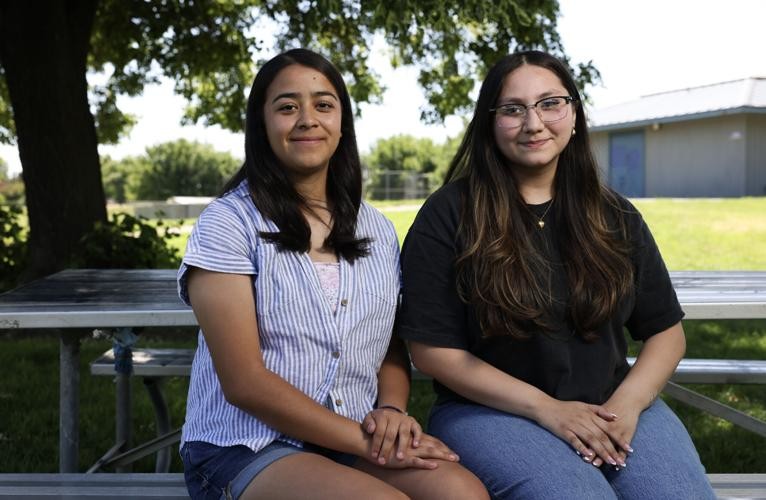
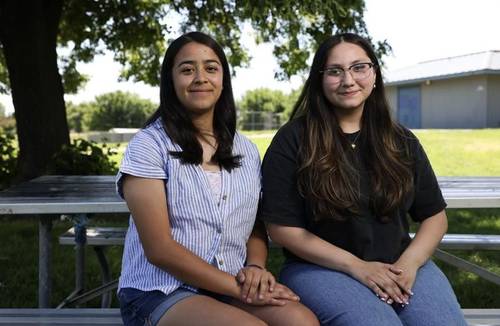
Ailema Osorio, left and Briehanna Quintero, right, are pictured together Tuesday, June 2 2026, in Sunnyside Wash. Evan Abell/ Yakima Herald-Republic
History teacher Jeanine Bator developed strong relationships with her students, having taught many of them in middle school before moving to Sunnyside High School.
Two years ago, a student she'd known since seventh grade was murdered across the street from the high school the year he was set to graduate. She went to the school board to ask that something be done to honor him and other students who died.
Bator said by her count, nine students have died at Sunnyside over the past 4 1/2 years. Three were in the 2026 graduating class. Of the nine, three students died by suicide, she said.
Sunnyside students Ailema Osorio, Anahi Camacho and Briehanna Quintero knew she was vocal about wanting the school to do more to remember students who died. They wanted to get involved in the process.
"They knew that I was a safe person to come to," Bator said. "And that I would support them in what they felt they needed."
For years, students and Bator have advocated for the high school to do more to honor students who died before graduating. At the district's board meeting on May 27, the student advocates were able to bring about change.
The Sunnyside school board approved a new policy outlining guidelines for memorials after a student or staff member dies.
At the board meeting, parents, educators and students spoke in support of the policy, including Osorio and Luis Ramirez, whose siblings died before graduating.
Sebastian Osorio, Israel Ramirez and Anthony Gutierrez, who would have been 2026 graduates, will be honored at this year's ceremony under the new policy.
Board members approved the change 4-0, with Anna Saenz abstaining.
"If I would have been a parent, I would have said yes right away," Saenz said. "But as I became an educator, there's something in me that I could not say yes all the way."
Around 75 community members attended the board meeting waiting for the results of a months-long process. When the policy was approved, the room erupted in applause, with some students shedding tears.
"It's been a very emotional three months," Sunnyside Superintendent Ryan Maxwell said.
Having a policy recognizing students in the graduating class who died was very important to the students, he added.
The new policy will set aside a chair at graduation for a deceased student, with family approval. It also sets out guidelines for temporary memorials, and other ways students can express their grief.
The policy
Before the new policy passed, the district didn't have a uniform policy or procedure for students to remember classmates who died, Maxwell said.
"Kids would oftentimes ask for things, but (there was) nothing in writing that guided what kids and families could do," he said.
Other schools have policies or informal initiatives to remember deceased students, so Osorio, Quintero, and others writing the policy drew inspiration from them. Bator said Toppenish, Granger and a high school in the Tri-Cities have procedures for their students to remember classmates.
Link to Sunnyside policy 2405 PDF
"We knew that other schools around here would do empty chairs at graduation if they had a student who had passed away," Bator said. "And we were like, well, if they're doing it, why can't we?"
The new policy defines memorials as objects or activities to remember a deceased person or an event that resulted in death.
Temporary memorials may be displayed in a designated area within the school until the day of the funeral or for no more than a week following the death, to allow students and staff to express their grief.
Students will be allowed to attend funeral services during the school day with their parents' permission.
Students and staff may express their grief in different ways within designated safe rooms, including writing letters, developing memory books or creating collages.
During graduation, with family approval, a chair may be set out for each deceased student from the graduating class. The family will receive a posthumous diploma.
"The community spoke loudly," Maxwell said. "The community that came to the board meetings wanted to have a chair, and so the chair was added to the policy."
Student advocacy
The memorial and commemoration policy passed about three months after students raised the issue with the school board, after having had no luck with the high school.
Osorio, Camacho and Quintero came together to make change and do something important for their classmates and family members, Osorio and Quintero said.
Students are always reminded, "Once a Grizzly, always a Grizzly," and Osorio wanted to ensure that the sentiment remained true, even for students who had passed away, she said.
Their advocacy increased as more students became aware of their efforts. Casandra Ramirez, who lost her brother in October, had been fighting for a policy change months before she found out what Osorio, Camacho and Quintero were doing.
A group of students initially met with Sunnyside Principal Gabe Darbyson and a school counselor.
Darbyson and the counselor said they were just there to listen, not make any decisions, Osorio said. But Osorio and Quintero didn't feel like they were getting anywhere regardless.
Darbyson did not respond to the Herald-Republic for request to comment.
"I felt like (I) was talking to a brick wall," Quintero said.
The conversations got emotional and, at times, heated. Osorio said they even had to take a break to calm the tension.
Osorio and Quintero felt they weren't making progress and officials had already said no in the past, so they went directly to the school board.
In January, students attended the Sunnyside board meeting to plead their case to board members. An action team was formed at the high school that included a representative from Educational Service District 105, a therapist, students, parents and staff.
Bator and two other teachers were on the team. Their role was to support the students and ensure their voices were heard, Bator said.
The team set out to draft a policy to remember deceased students, while aligning with mental health guidance from national organizations.
"A lot of people were supportive of it, and it did bring most of the class of 2026 together from this," Quintero said.
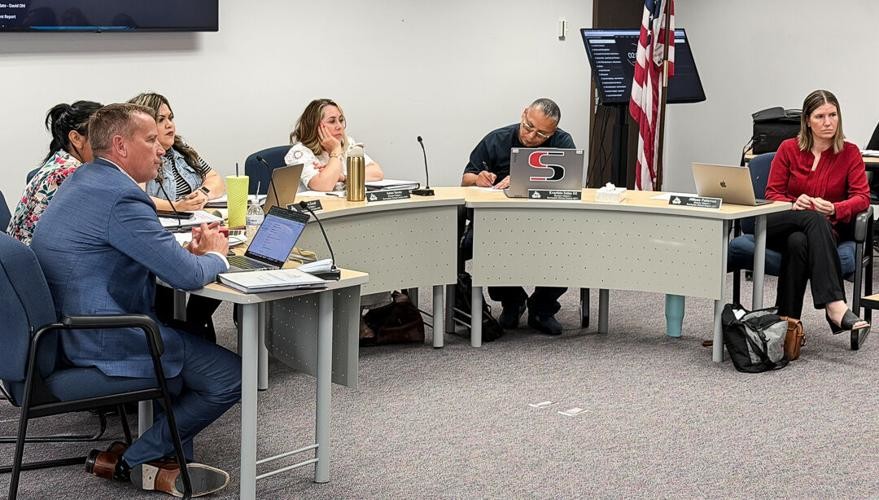
The Sunnyside school board listens to public comments at the board meeting on Wednesday, May 27.
Drafting the policy
The action team presented a draft policy to the board during a work session in late March. More discussions were held following the board meeting two days later, and two community members commented on the policy.
During late April's board work session and meeting, board members revisited the policy. At the board meeting, around 20 kids, families and teachers spoke in favor of the policy, Bator said.
"A lot of people would ask about it," Quintero said. "Even if they didn't go to the meetings, they still wanted to know what was happening."
Osorio and Quintero realized how much work goes into drafting school policies, including wording, understanding the difference between policy and procedure and, in this case, following mental health guidelines.
"It's hard, because (there are) so many things that you have to follow in the way you word stuff," Osorio said.
In addition to having a lawyer review the policy, the board received feedback from a developmental-behavioral pediatrician at the National Center for School Crisis and Bereavement.
Stronger support systems
Quintero said she felt more heard when she brought the issue to the Sunnyside school board.
As the action team got closer to the April board meeting for the policy's second reading, the process was taking an emotional toll on everybody, Bator said. They started to question whether it would become a reality.
The student advocates did get pushback throughout the process. Officials were worried the policy would glorify death or reignite trauma, but Osorio and Quintero said they were too focused on the negative.
In a letter submitted to the board during the March meeting, former Sunnyside student and behavioral health professional Roberto Rodriguez said Sunnyside has a distinct culture and traditions surrounding grief and death. The district is 92% Latino, according to the state Office of Superintendent of Public Instruction.
"In many cultures, the relationship with a loved one does not end at death. It continues," Rodriguez wrote. "It is honored. It is woven into ritual in the Latino community."
He mentioned Día de los Muertos as an example, a Mexican holiday where deceased loved ones are celebrated and honored. He supported a more culturally responsive policy for the student grieving processes.
The Sunnyside district has long had grief-response procedures, but Osorio feels they aren't enough.
The district has two different counseling staff teams, called flight teams, that are trained in grief response to help students process trauma. Classrooms receive messaging to share with students, and students are allowed to leave freely for safe rooms set up for grief counseling.
The flight teams have existed in schools for a few years now, and have even received recognition from the state, said Superintendent Maxwell.
Osorio said that the high school needs a stronger support system. To her, the counseling process felt distant — like they were reading from scripts.
"They should be there to hear (you) and provide comfort," she said. "Rather than, like, oh, you have a problem, let me stack a Band-Aid over it."
The counselors lost her respect in ways that she said were unforgivable, and she isn't the only student, she added.
Feeling relief
Osorio and Quintero feel relieved now that the new policy has passed, after sitting through months of meetings and dealing with a confusing school system.
Throughout the process, the two students learned more about their perseverance, maturity and self-determination. Quintero, the quietest advocate, got out of her comfort zone.
"All three of them have seen just how powerful their voices are," Bator said. "I've really seen them grow and mature, and they're willing to say what they feel and what they believe with their whole chest."
Getting the policy passed took a toll on Osorio and her family, especially. Her brother would be graduating this year, his birthday was May 29 and his death anniversary is July 12.
A lot was piling up, and she felt overwhelmed, but she kept pushing anyway because she said her advocacy felt important.
Bator said the students made a difference and their advocacy will help students in the future.
"This friendship, that I feel has been serving them, they have this bond and this legacy that they're creating for future Grizzlies," Bator said.
Contact Alexander Banks by email at [email protected], or by phone at 509-577-7654.
Alexander Banks’ reporting for the Yakima Herald-Republic is possible with support from Report for America and Yakima community members. For information on republishing, email [email protected]. To support local journalism, click here.
Posted June 04, 2026